
The pipa is a plucked Chinese necked lute with a history of more than 1,500 years. Its sound ranges from delicate, vocal lyricism to luminous, percussive energy—often within a single musical breath.
Characteristic is its flat, pear-shaped body, often crafted from hardwoods. Today, the pipa typically has four steel strings, commonly tuned a–e–d–A, and 24 to 30 frets—a construction that enables an exceptionally wide spectrum of tone colors and expression.
The instrument’s name refers to two fundamental stroke directions: “Pi” (琵) and “Pa” (琶) denote strokes in opposite directions. It is played mostly with natural or artificial fingernails, allowing dynamics, articulation, and tone to be shaped with great precision—from shimmering arpeggios to crisp, percussive accents.
This technical versatility makes the pipa a highly expressive solo instrument and a compelling partner in chamber and orchestral dialogue.
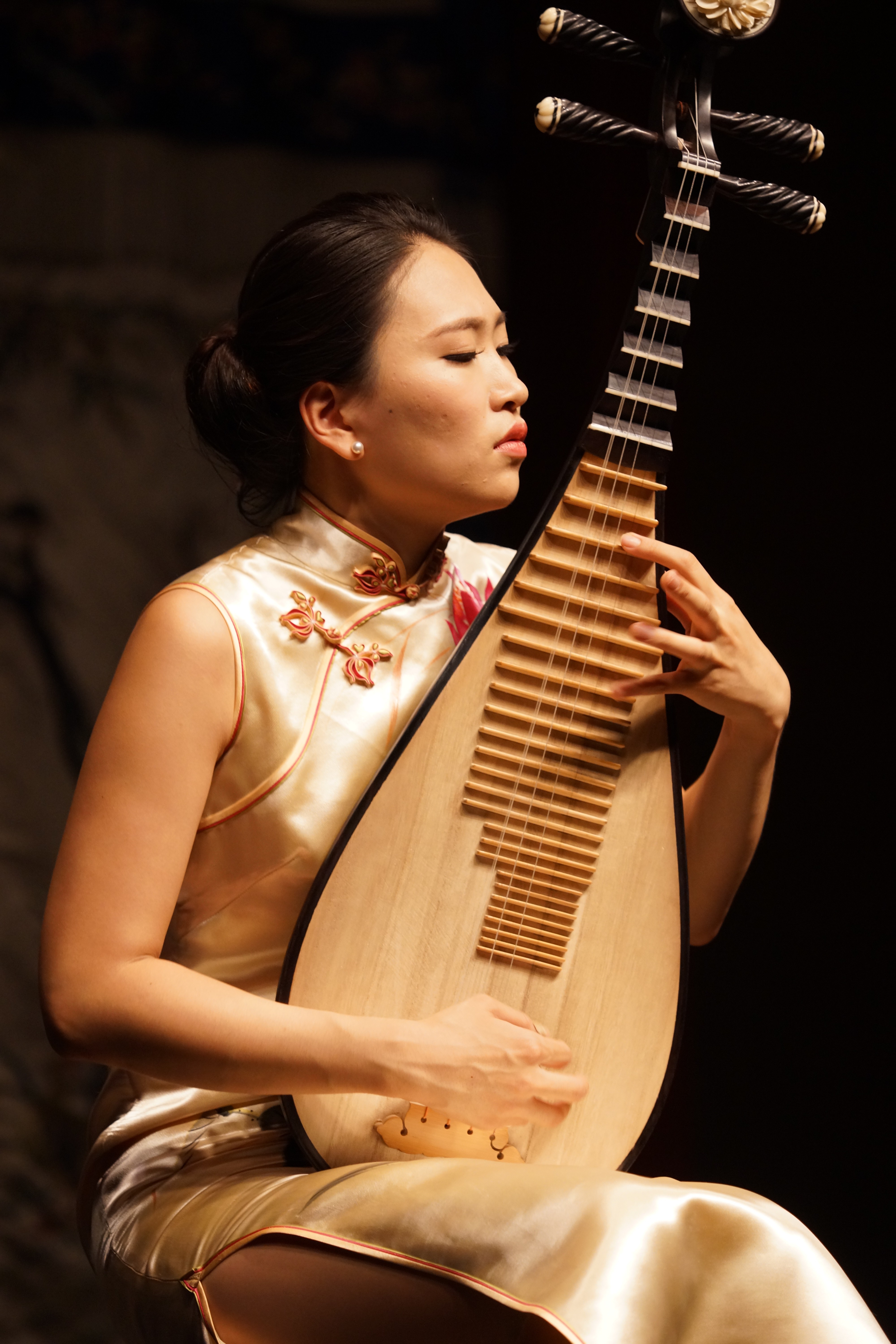
The pipa is a plucked Chinese necked lute with a history of more than 1,500 years. Its sound ranges from delicate, vocal lyricism to luminous, percussive energy—often within a single musical breath.
Characteristic is its flat, pear-shaped body, often crafted from hardwoods. Today, the pipa typically has four steel strings, commonly tuned a–e–d–A, and 24 to 30 frets—a construction that enables an exceptionally wide spectrum of tone colors and expression.
The instrument’s name refers to two fundamental stroke directions: “Pi” (琵) and “Pa” (琶) denote strokes in opposite directions. It is played mostly with natural or artificial fingernails, allowing dynamics, articulation, and tone to be shaped with great precision—from shimmering arpeggios to crisp, percussive accents.
This technical versatility makes the pipa a highly expressive solo instrument and a compelling partner in chamber and orchestral dialogue.

© Lucy Zhao Pipa 2026. All rights reserved.